TL;DR: Al Fahidi is one of Dubai's oldest residential neighbourhoods, a cluster of wind-towered courtyard houses built by Persian merchants over a century ago. It's quiet, it's walkable, and it's the antidote to everything you think you know about Dubai.
A Brief History
Al Fahidi, formerly known as Al Bastakiya, was settled in the early 1900s by merchants from the Bastak region of southern Iran. They came for the trade, stayed for the tax-free port, and built homes that reflected where they came from: thick coral-and-gypsum walls, internal courtyards, and barjeel (wind towers) that caught gulf breezes and funnelled them down into living spaces. Pre-AC engineering that actually worked.
By the 1980s, the neighbourhood was earmarked for demolition to make way for development. It survived thanks to a preservation campaign, and in the years since it's been carefully restored into a cultural quarter; galleries, cafes, museums, and boutique hotels threaded through the original lanes. The bones of the neighbourhood are authentic; the life inside them has evolved.
What to See
The Lanes Themselves
Before you go anywhere specific, just walk. The narrow alleys between the courtyard houses are the experience. The walls change colour depending on the time of day. Warm ochre in the morning, golden in late afternoon. There's no traffic, no noise, and a sense of scale that the rest of Dubai abandoned decades ago.
XVA Art Hotel & Gallery
A boutique hotel inside a restored heritage house, with a gallery that rotates exhibitions of contemporary Middle Eastern art. The courtyard cafe is one of the most peaceful spots in the city. Even if you're not staying or buying art, the building itself is worth seeing. It's one of the best examples of what these houses looked like when they were homes.
Coffee Museum
Traces the history of coffee from its Ethiopian origins through the Arab world and into global culture. The collection of antique coffee pots and roasting equipment is extensive. Entry is AED 10, which includes a small cup of Arabic or Ethiopian coffee.
Al Fahidi Fort (Still Closed)
A 5 minute walk from the neighbourhood, and the oldest standing structure in Dubai. Built in 1787, it has been a seat of government, a garrison and a prison over its life.
It has been closed since COVID and has not reopened. There is little to see from the street, so leave it off the plan until it opens properly. Then it is worth the walk.
Sjoudna
A Syrian-owned shop worth stopping into for handmade carpets and bags. The craftsmanship is genuine, the pieces have character, and it's the kind of place where you end up in a 20-minute conversation about where everything comes from. Support small, buy something that actually has a story.
Sheikh Mohammed Centre for Cultural Understanding (SMCCU)
This is where you go to ask all the questions you've been too polite to ask about Emirati culture. SMCCU runs cultural breakfasts and lunches. You sit on the floor, eat traditional food, and a host takes you through everything from marriage customs to the meaning behind national dress. Open to everyone, no question off limits.
Where to Eat & Drink
Al Khayma Heritage Restaurant
My top recommendation in the area. Emirati and Middle Eastern dishes in a setting that respects the food and the neighbourhood. The machboos is heavenly, the lugaimat dessert is the best I've tried yet, and the whole experience feels like eating at someone's home rather than a restaurant performing authenticity. Go hungry, order broadly.
Mazmi Cafe
The perfect post-walk reward, and one of the nicest places to sit in the neighbourhood. Coffee and gelato both, with rotating flavours and Middle Eastern-inspired options alongside the classics: saffron, pistachio, date.
Take your scoop out to the courtyard and sit under the shade of the trees, which is where you want to be. They also have a lovely little gift and souvenir shop, which is a far better place to pick something up than the usual suspects.
Practical Information
Getting There
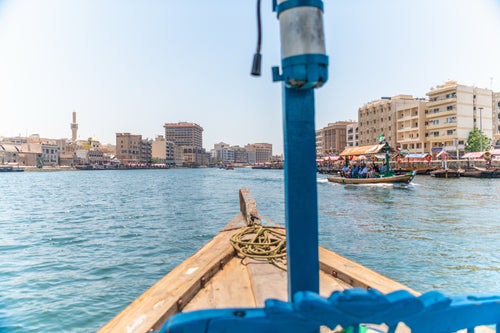
Metro to Sharaf DG station (Green Line), then about a 10-minute walk. Taxis drop you right at the entrance. If you're coming from Deira, you have two abras to choose from. The traditional wooden one is AED 1 in cash and drops you at Bur Dubai Abra Station, a short walk along the waterfront. The newer one with seating is AED 2 and runs straight to Al Fahidi station, though it goes on a schedule and the queue can get long, so do not leave it to the last minute. It does not take cash either: you will need a ticket from the information centre, a NOL card (one per rider), or an online booking.
Best Time to Visit
October through April, ideally in the morning (anytime between 9 and 11am) or late afternoon (after 3:30pm).
How Long to Spend
Budget 2-3 hours if you're walking, visiting a couple of spots, and sitting down for coffee or gelato. You could spend less, but you'd be rushing something that's designed to slow you down.
What to Wear
Comfortable shoes, sunscreen, and sunglasses. The area is walkable and flat, but you'll be outdoors for most of it so dress for the weather.
Frequently Asked Questions
Is Al Fahidi Historical District free to visit?
Walking the neighbourhood costs nothing. The lanes, the courtyards and the wind towers are all open to wander freely, and that is the main event. Individual museums and galleries inside it set their own entry, and most are modest. The Coffee Museum is AED 10, which includes a cup of Arabic or Ethiopian coffee.
Why is Al Fahidi also called Al Bastakiya?
Because the people who built it came from Bastak, in southern Iran, in the early 1900s. The neighbourhood took their name. It was formally renamed Al Fahidi, but plenty of people, signs and older guidebooks still say Al Bastakiya, and both refer to the same place.
How long do you need in Al Fahidi?
Two to three hours if you are walking the lanes, visiting a couple of spots and sitting down for coffee. You can do it faster, but the whole point of the place is that it slows you down.
What is the best time of day to visit Al Fahidi?
Morning between 9 and 11am, or late afternoon after 3:30pm, and October through April for the weather. The walls change colour through the day, warm ochre early and golden late, which is worth timing for if you are taking photographs.
How do you get to Al Fahidi?
Metro to Sharaf DG on the Green Line, then about 10 minutes on foot. Taxis drop you at the entrance. From Deira, two abras cross the creek. The traditional wooden one is AED 1 in cash and lands at Bur Dubai Abra Station, a short walk along the waterfront. The newer seated one is AED 2 and goes straight to Al Fahidi station, though it runs on a schedule and the queue can be long. It takes no cash either: ticket from the information centre, NOL card (one per rider), or book online.
Is Al Fahidi the same as Al Seef?
No. Al Seef is a modern waterfront development built in a heritage style, sitting right beside Al Fahidi along the creek. It is lovely, particularly in the evening, but Al Fahidi is the genuinely historic neighbourhood of the two.
Is Al Fahidi worth visiting?
It is the quietest and most human-scaled corner of Dubai, with no traffic, no noise and a sense of proportion the rest of the city gave up decades ago. If you want to understand what this was before the towers, this is where you go.
Go Deeper
Al Fahidi is one of the highlights of my Old Dubai Walking Tour. We spend time in the lanes, the courtyard houses, and the stories behind the neighbourhood that you won't get from a signboard. 4.25 hours, tastings included, max 12 people. If you want something more tailored, a private tour lets you set the pace and the focus.
Planning to walk it? My guide to the Old Dubai walking tour route, timings and how to choose one covers the 3 quarters, the abra crossings, souk opening hours and how to shop the Gold Souk well.
Still with me?
The rest of this guide is one email away.